

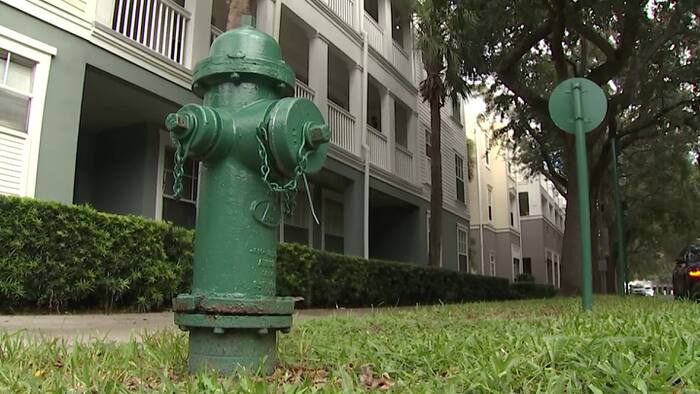
After years of traveling, James Bonifer decided to plant roots in downtown Celebration.
“I moved here because I wanted to have a happier, simpler life,” Bonifer said.
Instead, he says he has spent months trying to address a potential fire hazard involving his condominium.
“I don’t want to be in a position where I’m living under a fire hazard anymore,” he said.
Bonifer said it started in January of 2025 when his condominium board hired a company to clean dryer vents in the building; six months later, he received a demand letter from the board.
“I became aware of these issues formally with the demand letter that was sent in July of 2025 that told me that there was a life-threatening fire hazard related to my unit,” he said.
According to the demand letter, “During the inspection, it was found that the dryer vent in your unit is disconnected from the vent system within the wall in your unit. This appears to be a construction defect from when our building were orginally built - the dryer vents were never properly connected during the initial construction. This issue affects 17 units in our community, including yours.”
Disconnected dryer vents can pose a fire safety concern because hot exhaust air and lint may escape into spaces where they were not intended to accumulate.
Bonifer says trying to investigate and address the issue has been a frustrating process.
He claims the condominium association has made it difficult for him to obtain information and access areas necessary to evaluate the problem.
“The only way he [contractor] was able to even get the photos and even get access to the roof after I’d been asking for about eight months was he had to physically walk into the association management office,” Bonifer said.
After News 6 began asking questions, Bonifer said the association undertook extensive work to investigate the dryer vent concerns.
Osceola County officials told News 6 the work itself does not constitute a violation. However, a building violation case remains open pending final inspections and permit approval.
The condominium association said efforts to address the dryer vents are ongoing and resident safety remains a priority.
Bonifer’s experience prompted News 6 to take a broader look at fire safety in Central Florida’s apartment and condominium communities.
The investigation examined fire inspection records from three counties and found thousands of recorded violations affecting residential complexes.
Orange County had the largest number of documented violations in the records reviewed, with more than 1,900 violations across 106 complexes.
In Volusia County, records showed nearly 200 entries across nine condominium complexes.
In Osceola County, 76 buildings had documented fire code violations, including the complex where Bonifer lives.
The findings do not mean every building currently has an active fire hazard. Violations may have been corrected following an inspection, and the number of recorded violations alone does not establish how dangerous a particular property is.
However, the records highlight the importance of inspections, repairs and follow-up enforcement in protecting residents.
Florida’s Fire Prevention Code is enforced by local fire officials, including county, municipal and special district fire departments.
Residents concerned about their building’s fire safety can take several steps:
- Request fire inspection records. Contact the local fire marshal or fire prevention division and ask for the property’s most recent inspection report, documented violations and any follow-up inspections.
- Check whether violations were corrected. A previous violation does not necessarily mean a building remains unsafe. Ask whether the case is open or closed and if corrective work was verified.
- Request documentation from your association or property manager. Condo owners can ask for relevant inspection reports, repair records and information about ongoing work.
- Report suspected hazards. Contact the local fire prevention authority if you believe a fire safety issue has not been addressed.
- Verify permits and inspections. If repairs require permits, ask the local building department whether the necessary approvals and final inspections have been completed.
For Bonifer, the issue is about more than a disconnected vent or an open building violation case.
He says he simply wants assurance that his home is safe.
“I mean, I just want to be able to live in my home safely, you know,” Bonifer said.

