

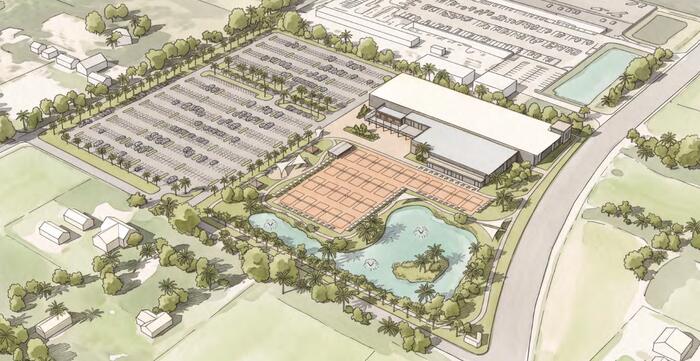
The Seminole County Clerk of Court & Comptroller’s Office has released a white paper report prepared by the Seminole County Division of Inspector General examining a proposed $175 million indoor sports complex — and the findings raise significant financial concerns.
The report provides an independent review of the project’s history and development, financial considerations, site compatibility, environmental considerations, regional market conditions and project risks.
Project growth raises concerns
The complex, intended to boost sports tourism and provide athletic and community venues, has grown considerably since it was first proposed. The plan has shifted from a 139,000-square-foot, $61.1 million facility in 2023 to a proposed 161,000- to 178,500-square-foot complex with estimated costs now ranging from $160 million to $175 million.
“The proposed costs have grown substantially, from $61 million in 2023 to the current projected cost of $175 million today,” said Clerk and Comptroller Grant Maloy. “It is important for the County Commission to carefully consider all of the potential risks and impacts to the taxpayers before moving forward with one of the most expensive projects in county history. Especially now with the passing of Amendment 3.”
Financial gap looms large
Consultants estimate the complex would generate $2.4 billion in local economic impact over 30 years. However, the white paper finds that direct revenues from operations and tourism taxes are projected at just $121 million over that same period — far short of the estimated $332 million in debt service if the project is fully financed. That leaves a projected $211 million funding gap.
Even if only the county’s portion — estimated at $110 million — is financed, the report projects an $88 million gap remains. The facility is not expected to be self-sustaining and could require diverting future county funds away from other priorities.
Opportunity costs, competition add to risk
The white paper also highlights the opportunity costs of the investment, noting it could impact or delay other county priorities such as infrastructure, parks and technology projects due to limited public funds.
Surrounding counties operate or plan competing large sports facilities, and Seminole County already faces growing regional competition that may limit the economic impact of a new complex. While the county has existing sports tourism programs, the report cautions that the competitive landscape could eat into projected revenues.
Site, environmental questions remain
The proposed facility sits adjacent to a masonry and concrete operation, raising potential concerns about air quality, dust, noise and traffic. The report recommends full environmental and operational compatibility studies be completed before the project moves forward.
Paths forward
The white paper outlines three options for county leaders: proceed with the project using public funds and accept the associated risks; explore a public-private partnership to reduce financial exposure; or delay or phase the project until there is greater certainty and potential funding improvements.
The Clerk’s Office promotes transparency and accountability regarding significant public investments under Florida law. The white paper offers an objective review of publicly available information to help inform public discussion of the project.
The analysis was based on information presented by county staff, consultants and other participants during public meetings, as well as publicly available documents and records.
