

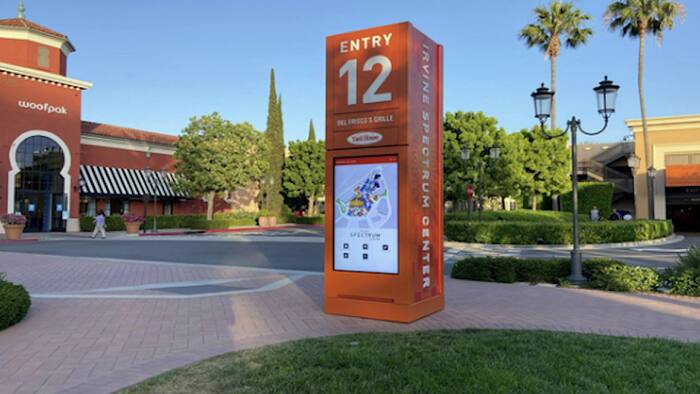
They’re a familiar sight in airports, shopping malls and hotels. Now, a technology company wants to bring interactive digital kiosks to Daytona Beach’s beachside.
Rove iQ is expected to present its proposal to the Beachside Redevelopment Board, pitching the technology as a way to help visitors navigate the area while giving local businesses another way to reach potential customers.
The outdoor kiosks feature large touchscreen displays that can provide interactive maps, directions, business listings, event information and advertising.
Visitors could use the screens to search for nearby restaurants, shops and attractions, then get directions to where they want to go. The technology can also connect with smartphones, allowing users to access maps and information on their own devices.
Rove iQ says its kiosk systems can be customized with local information, promotions and advertising. The company also offers software that allows content to be updated remotely.
[WATCH: Volusia beach businesses push back on county parking fee]
A new way to connect visitors with local businesses
For Daytona Beach, the idea could offer tourists another resource while they’re exploring the beachside.
Instead of searching online or trying to figure out where businesses are located, visitors could use a kiosk to find nearby places, discover events and learn more about what’s happening in the area.
The displays could also provide local businesses with an additional advertising platform, potentially putting their promotions in front of people already visiting the beachside.
Rove iQ markets its technology to cities, shopping centers, entertainment venues and other public spaces. Its outdoor kiosks are available in several screen sizes, including 55-, 65- and 75-inch models, with larger options also available.
The company says its systems can also use cameras and software to analyze how people interact with the displays. That raises questions about what information could be collected, how it would be used and who would have access to it.
Questions remain about the proposal
The presentation is expected to give board members a closer look at how the technology could work on Daytona Beach’s beachside.
But several details remain important, including how many kiosks could be installed, where they would be placed and who would pay for installation, maintenance, electricity and internet service.
There are also questions about whether advertising revenue could help offset the costs, whether the city or the Community Redevelopment Agency would receive any revenue, and how the kiosks would fit into beachside’s existing streetscape.
The presentation does not mean the kiosks have been approved or that installation is imminent.
For now, the proposal puts a new question in front of beachside leaders: Could interactive technology make it easier for visitors to explore Daytona Beach while giving local businesses another way to get noticed?
